A digital tool making a big difference in youth mental health

New kinds of tools are needed to help professionals support young people struggling with mental health challenges. In the wellbeing services county of Eastern Uusimaa, a digital intervention navigator called Nuorten Navi has proven to streamline assessments and guide young people toward the right care at the right time. The wellbeing services county is now expanding its use.
“It’s incredibly important that mental health services become more accessible and easier to reach. We need digital tools to help us,” says Marianne Korpi, a psychiatric nurse and intervention coordinator for children and adolescents in Eastern Uusimaa.
Korpi has 25 years of experience working with youth and adults in mental health and substance abuse services.
One recent and promising example of such tools is Nuorten Navi, designed specifically to support professionals working with young people showing signs of psychological distress.
Korpi praises the tool enthusiastically.
– After seeing strong early results, we’ve continued expanding its use to more units, she says.
Eastern Uusimaa introduced the tool at first in its youth mental health and substance abuse unit, Zemppi. It later expanded to student welfare services in upper secondary schools and is now also used in comprehensive schools.
Nuorten Navi is one of the outcomes of Finland’s national Therapies First (Terapiat etulinjaan) initiative, which aims to improve the accessibility and processes of basic-level mental health services. The tool has been adopted more widely across Uusimaa and is gradually spreading to other regions in Finland as well.

No need for young people to repeat their story
According to Korpi, Nuorten Navi has significantly improved the assessment process for care and psychosocial support. Young people can now be guided more quickly to the appropriate service. The information gathered through the navigator transfer seamlessly from one professional to another, as the data is entered into the client and patient information system after the interview.
Korpi notes that this also helps solve a common problem: young people no longer have to repeat personal issues multiple times at different stages of care.
– There’s always a risk the young person becomes exhausted from repeating their story — and that treatment is discontinued as a result, she explains.
Professionals have given highly positive feedback. Most report that the navigator has made assessments clearer and more efficient.
– It’s truly wonderful that we can improve young people’s wellbeing through new tools like this, Korpi says.
Young people no longer have to repeat personal issues multiple times at different stages of care.
Youth symptoms increasing
There is a clear need for a tool like Nuorten Navi. In Finland, one in four young people experiences mental health symptoms weekly. Identifying what type of support they need often takes time and can be challenging. Early recognition is crucial, as is ensuring that the young person receives the right help at the right moment.
Korpi emphasizes that access to support must be as easy as possible — something the design of Nuorten Navi takes into account.
So how does the navigator work?
A young person, and possibly their guardian, answers the tool’s questions anonymously online(Will be opened in a new window, You are transferring to another service). The tool then generates a code that the young person gives to a professional at their appointment or in another agreed-upon way.
Nuorten Navi is intended for 13–21-year-olds whose mental wellbeing is a concern either to themselves or someone close to them. The tool collects key information that helps determine — together with the young person — whether early support is sufficient or whether more intensive treatment or assessment is needed.
A major benefit is that information transfers as a whole from one professional to another, reducing repetitive administrative work and standardising documentation.
Digital tools can save billions
Korpi says social and healthcare services urgently need more digital tools that streamline work.
Fortunately, many already exist. One example is Terveyskylä (Health Village), which was awarded Finland’s “Best Digital Service of the Year” by Software Finland. The platform, developed by university hospitals, offers information, support, and digital care pathways for the public. It has been widely adopted nationwide.
In Uusimaa alone, Terveyskylä is expected to produce cost savings of around one billion euros.

Root causes must still be addressed
While Korpi strongly supports smart digital tools, she stresses that Finland’s social and healthcare crisis – and youth problems – cannot be solved without addressing the underlying causes of the problems.
One common factor she highlights is school bullying, which far too often lies behind mental health problems among children and young people.
Programs such as the well-known Kiva School anti-bullying initiative exist but implementing them requires funding and personnel. Korpi says legislation must also better recognize repeated harassment and online bullying.
– It’s our responsibility as adults to recognize and acknowledge what lies behind young people’s distress and to work toward fixing the situation, Korpi says.
Cases

Innovative Helsinki-Uusimaa
The Helsinki-Uusimaa Region is one of the most innovative regions in Europe and the most dynamic region in Finland.
Take also a look at these
 News
News
8.10.2026
Over billion euros in Horizon Europe funding secured for Helsinki-Uusimaa
Organisations in the Helsinki-Uusimaa region have so far received around 1.07 billion euros from the European Union's Horizon Europe programme for research, development and innovation (RDI) activities. This is more than 60 per cent of all the funding Finland has received during the EU's current programme period of 2021–2027.
 Cases
Cases
7.10.2026
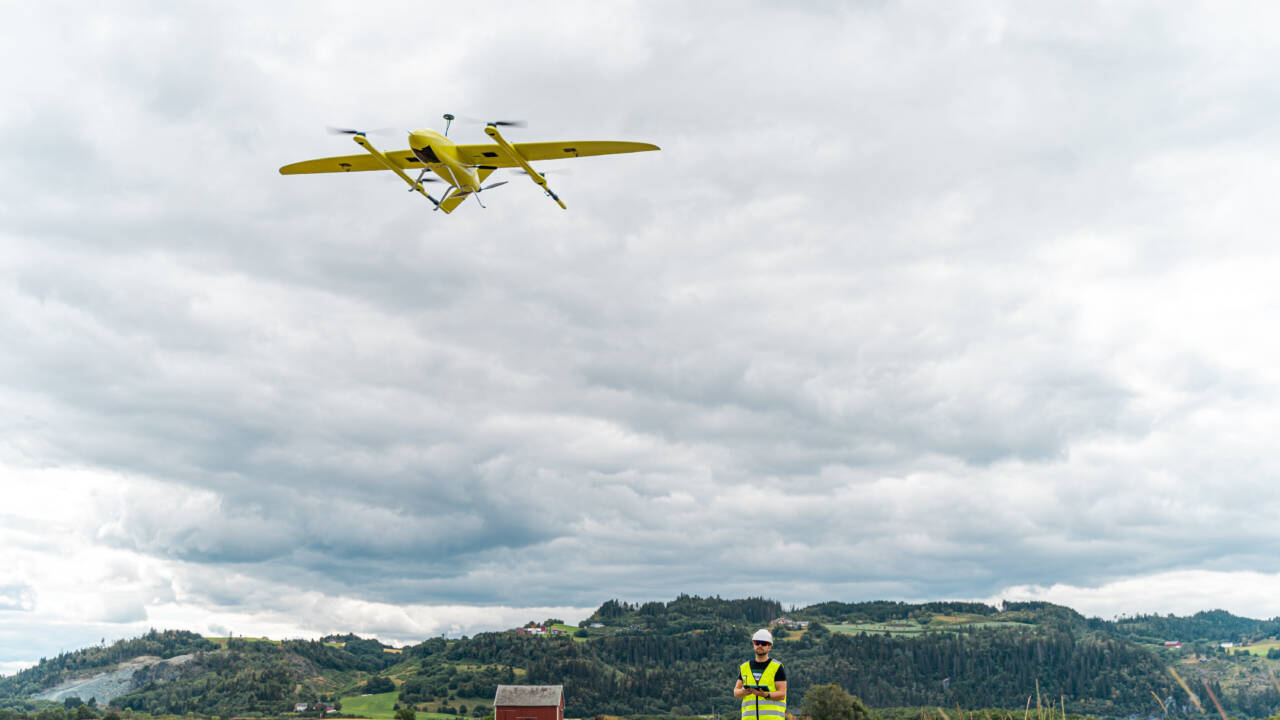
Future traffic in the Baltic Sea and urban airspace
Safe navigation in the waters and air of the Baltic Sea region is increasingly dependent on up-to-date information, functioning backup systems, and foresight. In projects under the Interreg Baltic Sea Region programme, Finnish operators have developed solutions that improve navigation and preparedness for disruptions, and help cities to prepare for the proliferation of drones.