Helsinki-Uusimaa calls for EU acknowledgment of Russian airspace closure effects
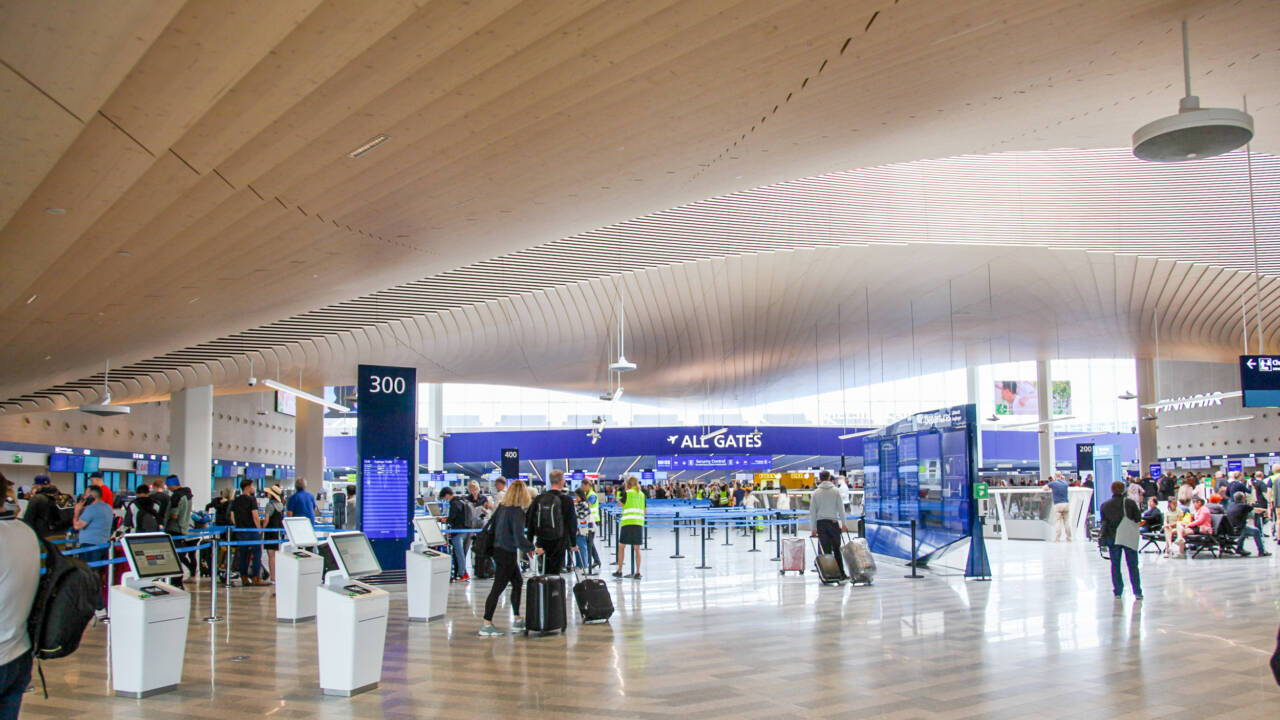
The Russian airspace closure has had its consequences for European airlines. The number of passengers at the Helsinki-Vantaa Airport is also yet to recover from the dip due to COVID-19.
While most major airports in Europe have reached or surpassed pre-covid numbers, Helsinki-Vantaa reported 16,3 million passengers for the year 2024. This is around 25% less than in the year 2019, when 21,9 million passengers passed through the airport.
– The drop in passenger numbers at Helsinki-Vantaa has a negative effect on the development of the Helsinki-Uusimaa Region, as well as for the whole of Finland. Missing passengers include incoming tourists, but also business passengers that have used Helsinki-Vantaa as a gateway between Europe and Asia. This has boosted the region’s attractiveness, the Regional Mayor, Ms Tuija Telén, comments.
As a result of the Russian airspace closure, Finnair, i.e. the national carrier, has had to cut many of its routes to Asia, as its airplanes are forced to circumvent Russia. This gives non-European airlines still using the Russian airspace for their connections to Europe, a competitive edge.
Locally, the loss of connections has had a negative effect on Vantaa, the city that hosts the airport.
– Vantaa has invested heavily on the development of the airport’s ecosystem, says Mayor, Mr Pekka Timonen.
– The Helsinki-Vantaa ecosystem is roughly 3% of Finland’s GDP, Timonen adds.
The airport and the adjacent Aviapolis economic area have roughly 42.000 working on site.
CPMR and Helsinki-Uusimaa encourage the Commission to reassess some of its aviation related policies
Currently, the European Union is revising its rules for state aid. In an ongoing public consultation on state aid, the Conference of Peripheral Maritime Regions (CPMR) calls on the EU to revise its aviation guidelines. The CPMR brings together 160 regions from 24 states. The region Helsinki-Uusimaa supports the CPMR’s position.
For Helsinki-Uusimaa at least two different topics in the ongoing consultation are of critical importance. These are the eligibility criteria for state aid and the definition of catchment areas.
– For us it is important that the EU Commission allows subsidies also for a large airport, especially in unforeseen circumstances, such as the closure of the Russian airspace. Furthermore, EU definitions of airports catchment areas need to consider new geopolitical realities. For Helsinki-Vantaa, the border closure to Russia means that most Russian nationals are not able to use the airport for their travels anymore, says Mr Janne Leino, Director of Helsinki EU Office.
Learn more
For more information, please contact:

Janne Leino
Head of Helsinki EU Office
In charge of the Office

Tuija Telén
Regional Mayor
tuija.telen@uudenmaanliitto.fi
In charge of Council activities, finances and administration, preparation of items to be processed by Regional Board
Appointment bookings: Assistant Hanne Koljonen, phone: +358 40 552 3152
Take also a look at these
 Cases
23.10.2026
Solar energy for housing companies and hydrogen as fuel – Interreg projects deliver future energy solutions
The Interreg Baltic Sea Region projects tackle cross-cutting future challenges and increase cooperation between EU regions. Finland has been involved in projects whose road maps have been created to increase the use of hydrogen fuel in lorry traffic and at airports. There have also been studies on the establishment of solar energy communities.
 Cases
7.10.2026
Future traffic in the Baltic Sea and urban airspace
Safe navigation in the waters and air of the Baltic Sea region is increasingly dependent on up-to-date information, functioning backup systems, and foresight. In projects under the Interreg Baltic Sea Region programme, Finnish operators have developed solutions that improve navigation and preparedness for disruptions, and help cities to prepare for the proliferation of drones.