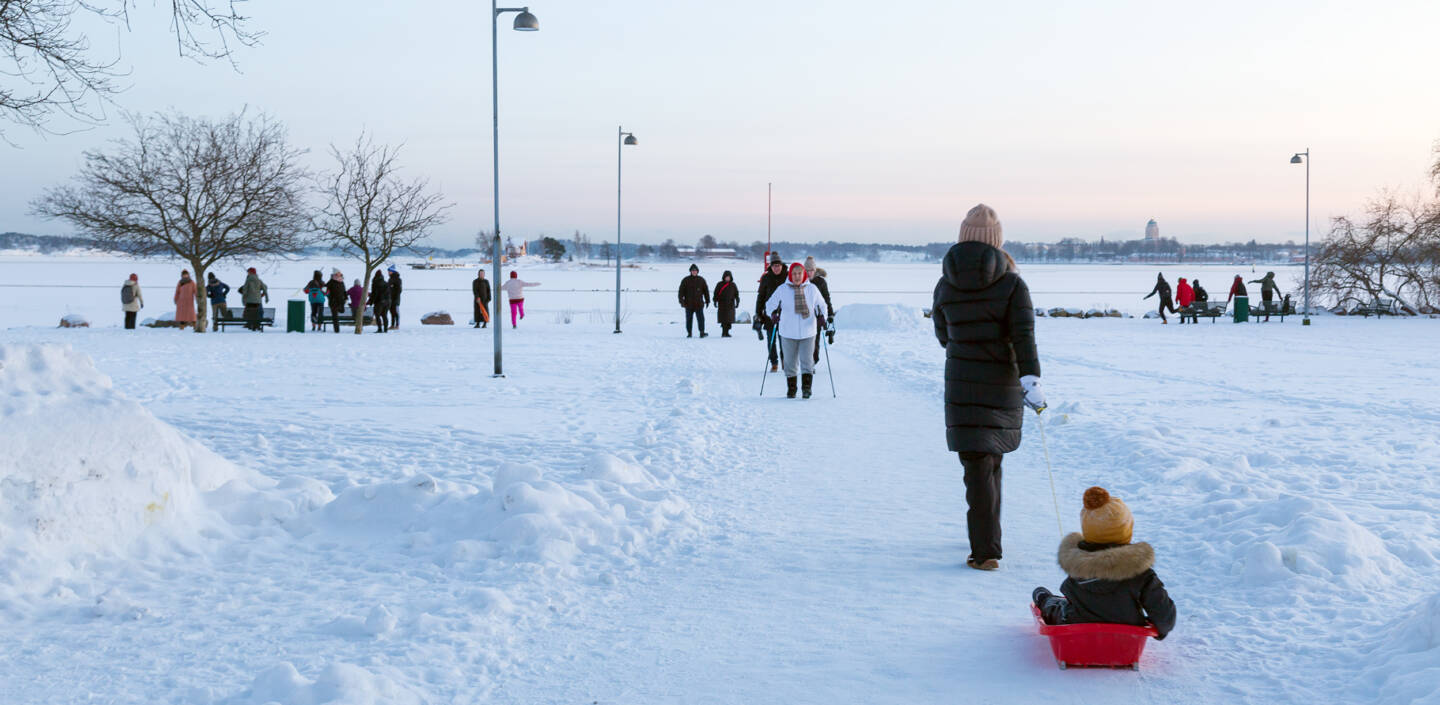
Helsinki-Uusimaa is aiming at climate neutrality by the year of 2030, in line with the forerunner municipalities of the region. The Helsinki-Uusimaa Regional Climate Road Map is the guideline for the climate work supporting our municipalities and other actors in the implementation of their mitigation goals.
Helsinki-Uusimaa is aiming at climate neutrality by the year of 2030.
Our urgent goal of climate neutrality calls for cooperation on a wide scale in all sectors; public, private and RDI, and that is done by furthering shared projects. The climate actions of our region are based on local strengths and the sharing of best practices.
Six climate spearheads in Helsinki-Uusimaa
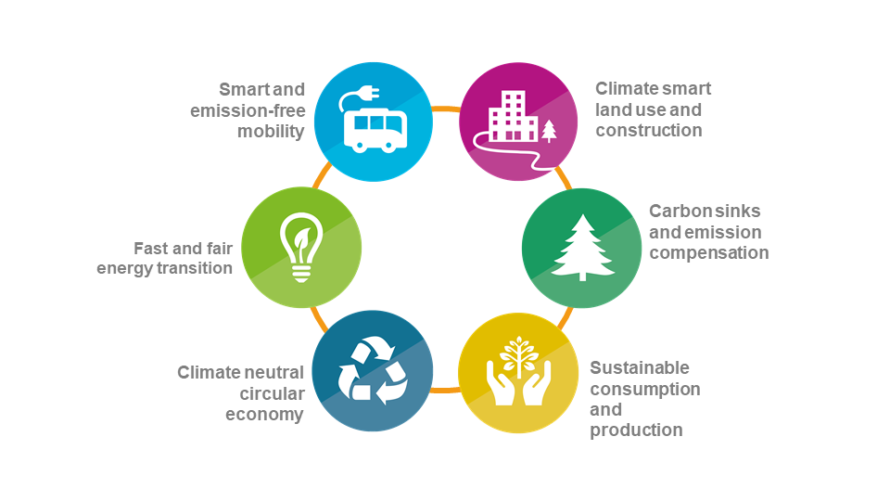
Our Regional Climate Road Map includes six focus areas for climate change mitigation. These six spearheads have been chosen as the most vital and urgent themes for climate neutrality.
Five of our spearheads strive to mitigate climate change and to support a green transition. They represent the most important emissions sources of the region. The focus of mitigation lies on climate smart land use and construction, smart and emission-free mobility, fast and fair energy transition, climate neutral circular economy, together with sustainable consumption and production.
It is practically impossible to reach climate neutrality without carbon sequestration and compensating residual emissions. Therefore, the sixth spearhead of the roadmap aims to strengthen regional carbon sinks and storages, and to compensate for any residual emissions.
Finnish cities and municipalities are very autonomous and thus in a key position when it comes to enabling a climate neutral region. All large cities in our metropolitan region, as well as many smaller member municipalities already have action programmes of their own. However, reaching the ambitious goal naturally calls for international cooperative actions on our behalf, too.
Emissions in Helsinki-Uusimaa fallen by almost a third
In our quest for carbon neutrality in 2030, we use 2005 as the reference year. In recent years, we are pleased to see the emissions in the Helsinki-Uusimaa Region fallen by 39 percent, and even by 44 percent per capita. While our regional emissions account for 20 percent of the national ones, the emissions per capita are well below the national average and decrease more quickly.
Emissions from transport and heating dominate the emission profile of our region. In 2024, the total emissions of our region were 5,1 million tonnes CO2e, or 2,9 tonnes per capita.
The development of emissions in the region is followed up according to an annual national inventory by the Finnish Environment Institute.
Find out more

Helsinki-Uusimaa Circular Hub – pioneering together for circular economy
The Helsinki-Uusimaa Circular Hub is a community with municipalities, various organisations, research institutions and experts – together we take Helsinki-Uusimaa and Finland to the international top of circular economy.


For more information, please contact:

Pia Tynys
Sustainability Manager
Climate work in Helsinki-Uusimaa, green transition, climate roadmap: Carbon Neutral Helsinki-Uusimaa by 2030
Current
 Cases
Cases
2.9.2026
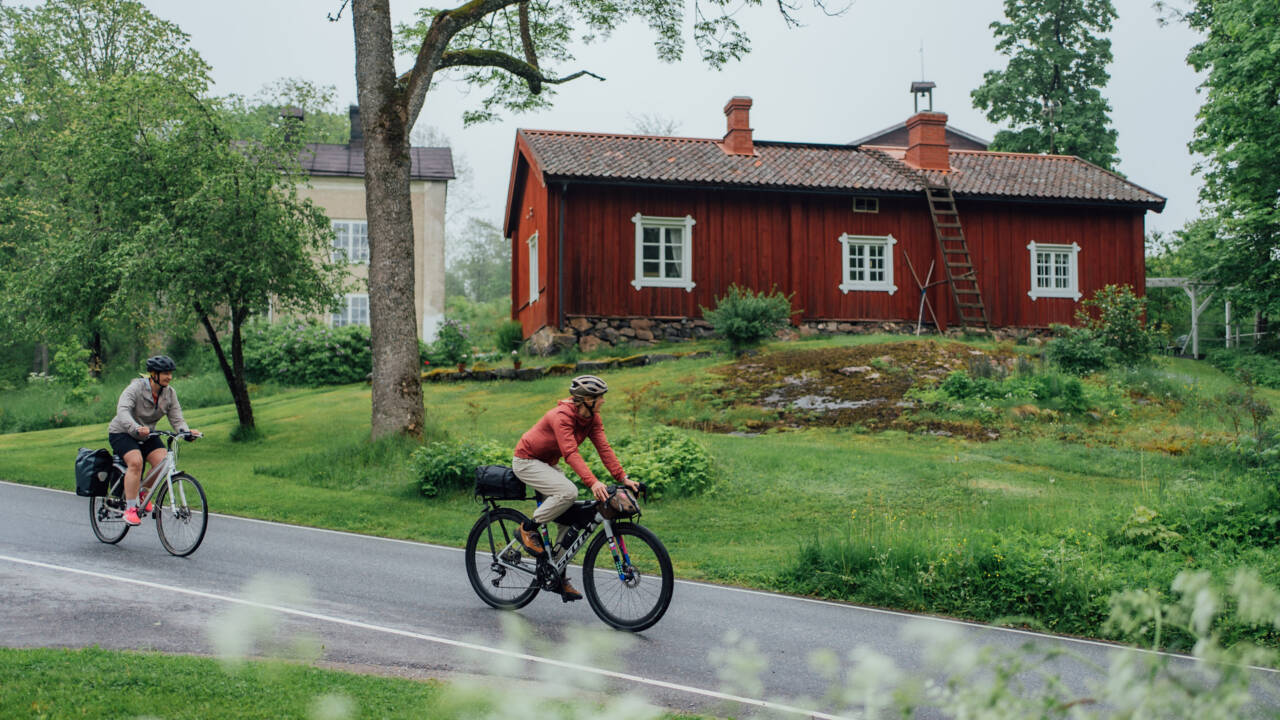
Sustainable tourism on the shores of the Baltic Sea – Water load management, cycling routes, and rural produce
Protecting the sensitive waters of the archipelago with wastewater solutions, Europe-wide cycling tourism highways, and new services from rural food producers all go hand in hand. Tourism in the Baltic Sea region is developed sustainably through cross-sectoral, cross-border cooperation and flexible local solutions. They are made possible by the EU's Interreg Baltic Sea Region programme.
 Cases
Cases
23.6.2026
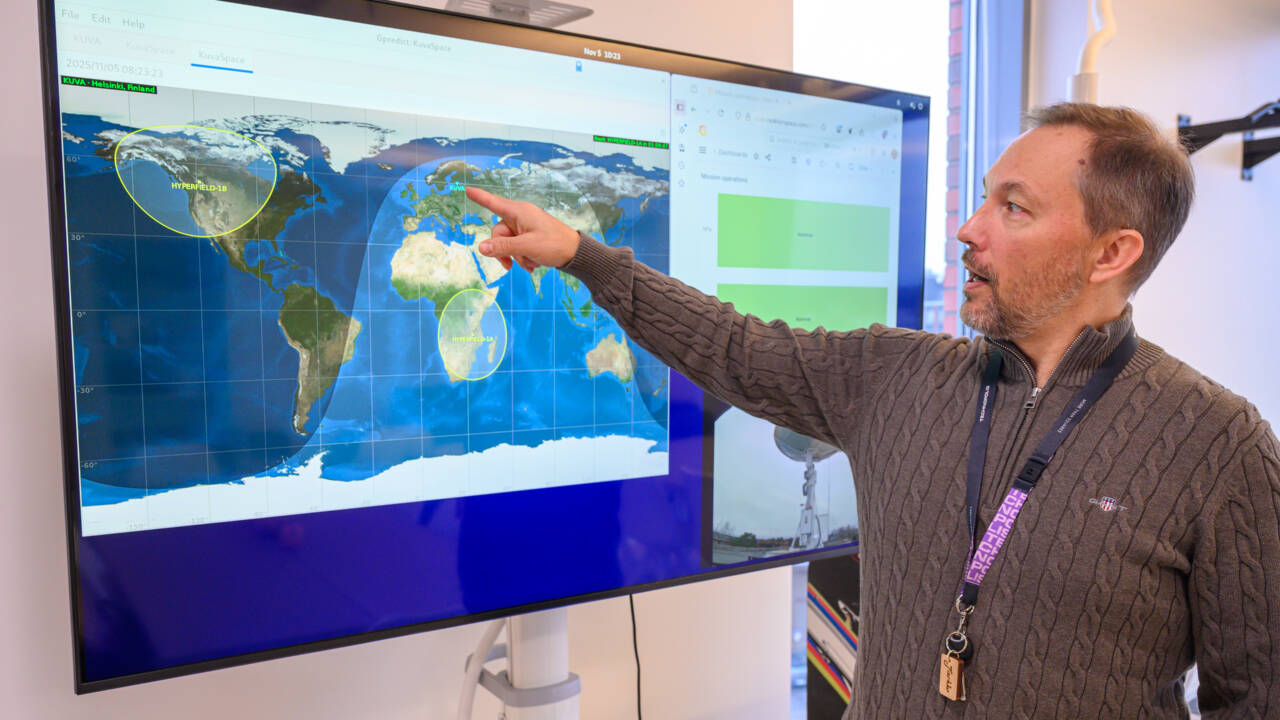
Daily global data from Kuva Space’s satellites
Kuva Space captures rapidly updated Earth observation data through its microsatellites. While the information is increasingly vital for global security, it is also used to monitor climate change, forecast crop yields, analyse water quality, and support land-use planning.
This page was last updated: 3.2.2026