A more efficient nutrient cycle and clean potato stocks – Interreg projects boost Finland’s food security
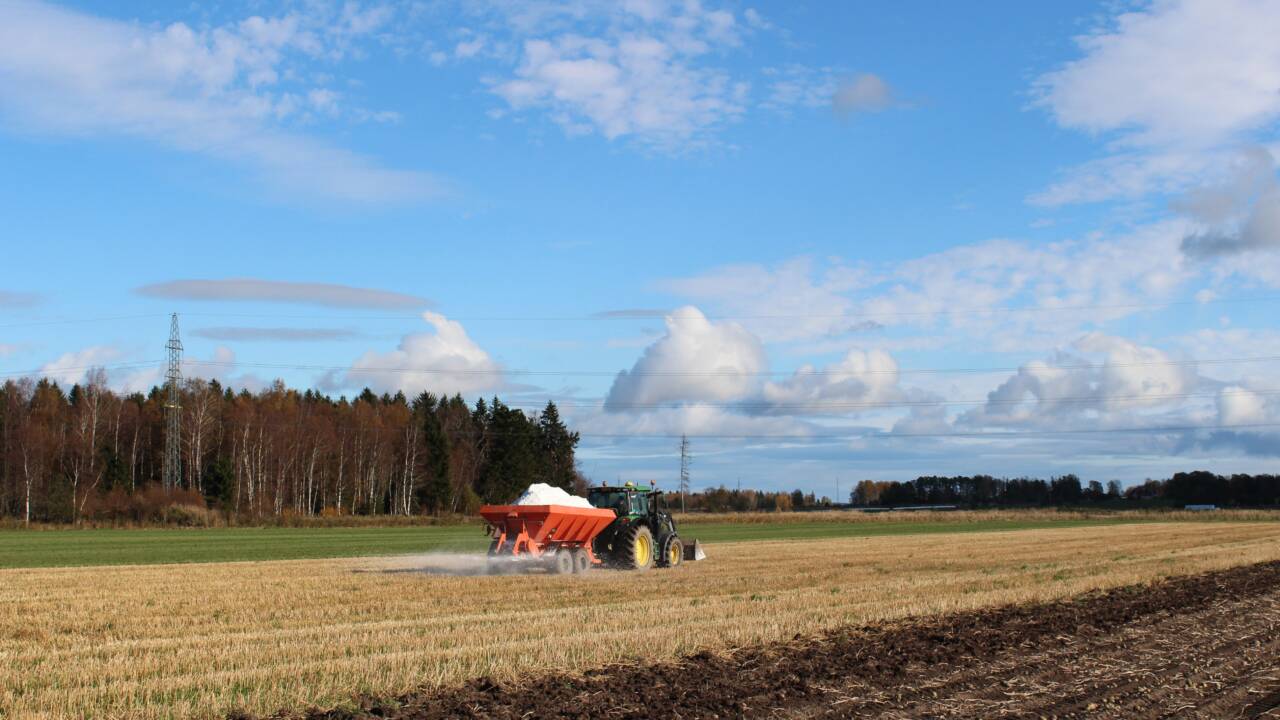
Domestic food production is a pillar of Finland’s security of supply. However, the sector is challenged not only by geopolitical crises but by climate change and the need to reduce production emissions. The Interreg projects have responded to these challenges through international cooperation. Some of the project’s focuses have been on promoting the use of recycled nutrients and reducing the nutrient load ending up in waterways.
Finnish operators have sought scalable solutions for more sustainable agriculture and self-sufficient food production together with neighbouring countries through projects funded by the Interreg programme- Thanks to these projects, the gypsum treatment of fields has increased, the availability of clean potato varieties has improved, and nutrient recycling and the versatile utilisation of green areas have advanced significantly.
Gypsum treatment of fields has the potential to reduce the phosphorus load in the Baltic Sea
Eutrophication is one of the biggest problems in the Baltic Sea. The majority of phosphorus that eutrophies the Baltic Sea today comes from fields where rain washes nutrients into waterways. In Finland, the problem has been identified and a solution has been sought through treating the fields with gypsum, which studies show to be a very effective method. However, the method is still quite unknown in other countries surrounding the Baltic Sea.
The GYPREG project led by the Finnish Environment Institute investigated and piloted the potential of gypsum treatment in Åland, Sweden, Latvia, Lithuania, and Poland.
– Unlike traditional water protection methods, which can take decades, gypsum affects the fields almost immediately. We have already achieved amazing results in Finland: in some experiments, as much as half of the phosphorus load has been removed, explains Petri Ekholm, the project’s lead researcher at the Finnish Environment Institute (Syke).
Åland, where the most phosphorous-rich fields in Finland are located, was chosen as the test area for gypsum treatment. Six farmers participated in the pilot experiment, and 220 hectares of arable land were tested with different crops. According to Syke’s measurements, gypsum significantly reduced the tendency of phosphorus to dissolve from soil particles into water.
With the project, awareness of the benefits of gypsum has increased throughout the Baltic Sea region. Operating models will be developed next to support the method.
– According to the survey carried out in the project, almost 70% of farmers in Åland have a positive attitude towards gypsum treatment and would consider using it. The results from other countries are also similar, which means that gypsum treatment also has potential outside Finland, says Maija Salmiovirta, Project Manager at the John Nurminen Foundation.
Recycling nutrients to resolve uneven nutrient distribution
The need for regional cooperation between the Baltic Sea coastal states was also identified in the CiNURGi project, which sought ways to reduce the nutrient load washing out into the Baltic Sea.
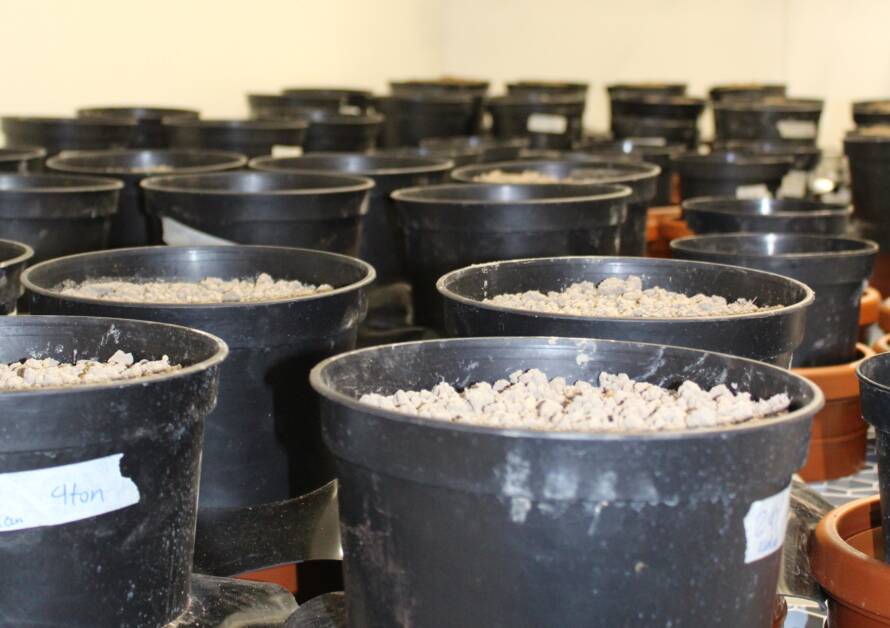
A survey carried out by the Natural Resources Institute Finland found that Finland produces around 17.9 million tonnes of recyclable biomass annually from various sources, such as in the form of household and industrial waste streams and livestock manure. These biomasses are rich in the nutrients that agriculture needs, such as phosphorus and nitrogen.
However, the geographical distribution of these nutrients is uneven. It can be improved by processing biomass into a transportable and usable form, such as recycled fertilisers. When optimally utilised, domestic biomass could cover up to 90% of the phosphorus needs of Finnish plant production.
– In the CiNURGi project, we ran a pilot experiment on the production of recycled fertilisers together with companies and accelerated investments in the sector. For example, the Alastaro-based company Kuljetus Tero Liukas Oy invested in an infrared measuring device mounted on a transport lorry to measure the nutrient content of the sludge mass in real time during its transport, says Sari Luostarinen, Senior Specialist at LUKE.
Next, the project will draw up policy recommendations to guide the Baltic Sea countries in the use, processing, and allocation of nutrients.
Clean potato varieties improve food security
Potatoes have been an important crop in Finland for several centuries. It’s a bountiful producer and a reliable farm crop in our Nordic conditions, and its production is sufficient both for our country’s own needs and for export. However, the availability of clean seed potatoes for special potato varieties is limited in the small Northern European market. Production is threatened by plant diseases and uncertain harvest years which can weaken self-sufficiency and, by extension, food security. That is why diversity is important in potato cultivation.
In the MainPotRe project, LUKE and the Finnish Food Authority, together with partners in Estonia and Latvia, aim to improve the availability of special potato varieties by identifying old potato strains and storing them in local gene banks.
Many similar potato stocks were discovered in the target countries under different names during the project. Data from gene banks were harmonised and the availability of local potato varieties to consumers was increased. In Finland, the focus was on improving the awareness of local special varieties, such as the Lemin Punanen and the Vaaniin Herkku from Eura. Nearly 200 potato varieties used by hobby farmers were found and surveyed in Finland in the Potato Varieties Diversity Survey.
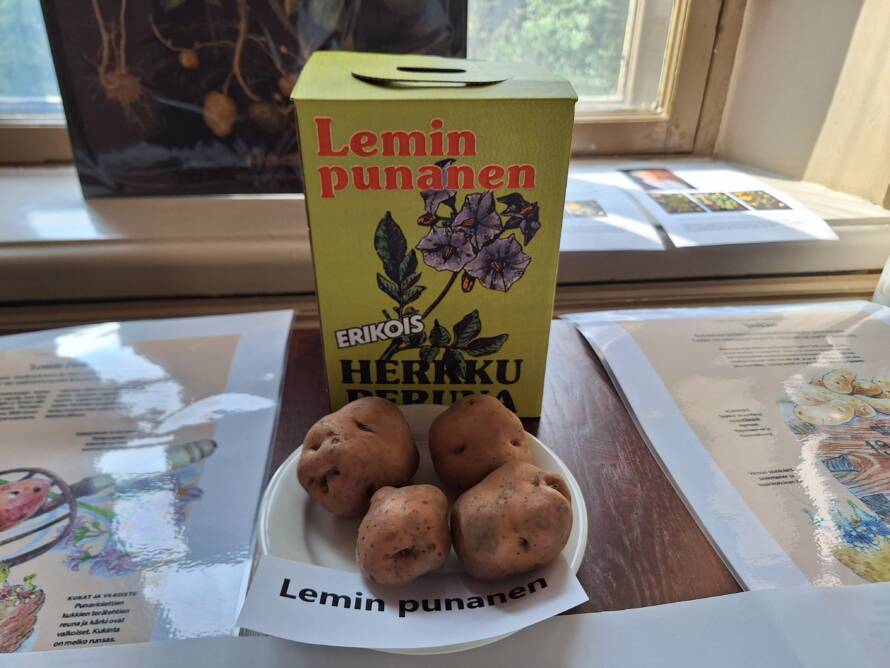
– We have improved the availability of seed potatoes and raised awareness of where consumers can get clean seed potatoes for special potato varieties. Assembling the potato stocks of varieties with different names has also been very important in determining potato varieties that have a cultural and historical significance for us here in Finland. If this material was never explored, we might lose some of the potentially unique potato stocks that have been cultivated in Finland for 200 years, says Veli-Matti Rokka, MainPotRe’s Project Manager from LUKE.
Virtual models from nature for wellness and education
In addition to nutrients and self-sufficient food production, Interreg funding has been used to study the use of nearby parks as support for wellness and learning by utilising new technology. In the Interactive Gardens project, LUKE and Elonkierron ystävät ry developed the virtual Elonkierto Park, which was used to test how a virtual model could work as a learning environment for natural resource information.
Elonkierto is an agricultural and natural resources research demonstration park located in Jokioinen. School groups were able to learn interactively using the virtual model to gain a better understanding about the origin of food, plant and animal genetic resources, agriculture, and nature research. The learning environment was LUKE’s VirtuLab which brings natural and other environments indoors by using high-quality audiovisual means.
– LUKE’s previous research has found that the virtual nature experience has similar wellness effects to being out in nature. The students who tested Virtual Elonkierto found that it is even easier to concentrate in the virtual space when you can focus on only a few things at a time, such as exploring different potato varieties, says Sirpa Kurppa, Project Manager at Elonkierto.
Virtual models make learning about nature and enjoying it accessible to, e.g. the elderly, who are no longer physically able to go out in nature. In addition to these solutions, the project is currently developing a concept paper that can be used to implement design principles that support wellness and learning in parks for urban land use and, thus, increase the use and users of green spaces and nearby natural areas. The development of the concept paper has involved the cities of Tornio and Forssa, among others.
– Thanks to the concept paper, we can increase the utilisation rate of parks and recreation areas and thereby improve people’s health and social wellness. The educational aspect of the project also enables lifelong learning, summarises Leila Grönholm, City Gardener for Forssa.
Creating impact through projects
The Interreg Baltic Sea Region 2021–2027 Programme is a transnational cooperation programme covering countries across the Baltic Sea region. While the programme area includes several major European metropolitan regions, the majority of the territory is rural.
The programme aims to support the green transition and strengthen resilience across the Baltic Sea region, while improving the quality of life of its residents.
The Helsinki-Uusimaa Regional Council is responsible for national communication for the Baltic Sea Region Programme. In addition, we grant and pay national co-financing to Finnish partners in projects funded under the programme during the 2021–2027 programming period and act as the programme’s supervisory authority.
This article is part of a five-part series exploring the results and impacts of Interreg Baltic Sea Region projects. The article was written by Aili Autio (OSG).
Take also a look at these
 Cases
23.10.2026
Solar energy for housing companies and hydrogen as fuel – Interreg projects deliver future energy solutions
The Interreg Baltic Sea Region projects tackle cross-cutting future challenges and increase cooperation between EU regions. Finland has been involved in projects whose road maps have been created to increase the use of hydrogen fuel in lorry traffic and at airports. There have also been studies on the establishment of solar energy communities.
 News
8.10.2026
Over billion euros in Horizon Europe funding secured for Helsinki-Uusimaa
Organisations in the Helsinki-Uusimaa region have so far received around 1.07 billion euros from the European Union's Horizon Europe programme for research, development and innovation (RDI) activities. This is more than 60 per cent of all the funding Finland has received during the EU's current programme period of 2021–2027.
 Cases
7.10.2026
Future traffic in the Baltic Sea and urban airspace
Safe navigation in the waters and air of the Baltic Sea region is increasingly dependent on up-to-date information, functioning backup systems, and foresight. In projects under the Interreg Baltic Sea Region programme, Finnish operators have developed solutions that improve navigation and preparedness for disruptions, and help cities to prepare for the proliferation of drones.
 Cases
2.9.2026
Sustainable tourism on the shores of the Baltic Sea – Water load management, cycling routes, and rural produce
Protecting the sensitive waters of the archipelago with wastewater solutions, Europe-wide cycling tourism highways, and new services from rural food producers all go hand in hand. Tourism in the Baltic Sea region is developed sustainably through cross-sectoral, cross-border cooperation and flexible local solutions. They are made possible by the EU's Interreg Baltic Sea Region programme.